Trades · 5 min read
Lead sites vs your own website: the real cost for trades
The short answer
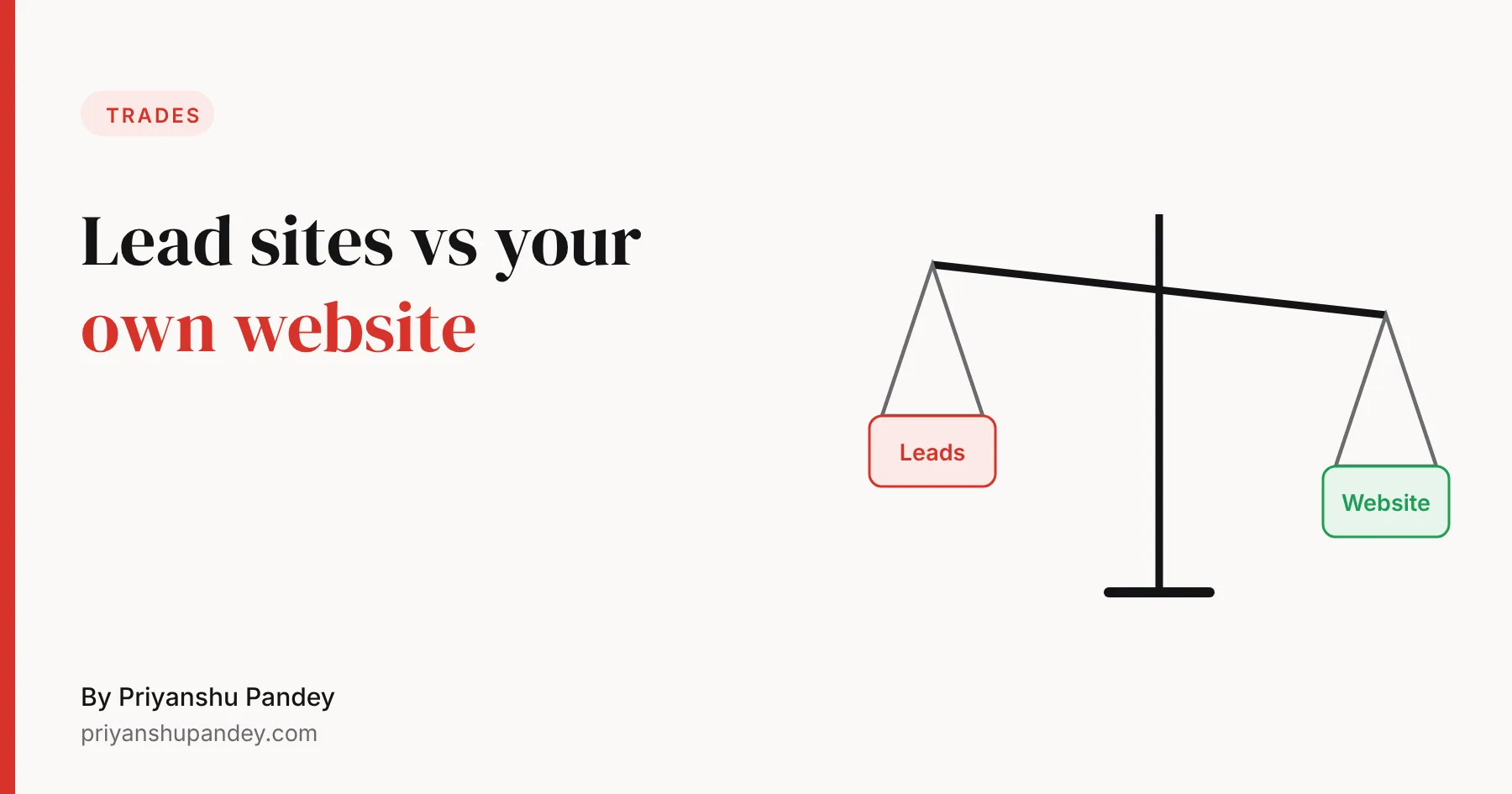
Lead platforms are useful when you’re starting out, but you pay every month or every lead, the same job is often sent to several trades, and you build the platform’s brand rather than your own. Work out your real cost per job won for each platform, then grow your own website and Google profile until you can cut back.
Key points
- Work out cost per job won, not cost per lead.
- Shared leads mean you compete on price before you speak to the customer.
- Your own website and Google profile keep working without paying per enquiry.
How the main UK lead platforms charge
Each platform makes money differently, so the true cost depends on how many leads you win. These are the published models as of August 2026, from a comparison by Whito; prices change, so always check the platform’s own page.
| Platform | How you pay | Published cost | Leads shared? |
|---|---|---|---|
| Checkatrade | Monthly subscription, 12-month term | Free tier; Approved £30/month; Growth from £59/month | Not stated |
| MyBuilder | Pay when shortlisted | Shortlist fees typically £2–£35 + VAT | No limit published |
| Bark | Buy credits to contact leads | £1.80 per credit; credits expire after three months | No limit published |
| Rated People | Subscription plus lead credits | Price not published | Up to three trades per lead |
| Which? Trusted Traders | Assessment plus subscription | £248 assessment; £66/month for 0–3 staff | Not stated |
According to Checkatrade’s own trade support page, its £30 Approved tier does not appear in standard search results, so it works more as a verification badge than a lead source.
Work out your real cost per job
A £10 lead sounds cheap until you count the leads you didn’t win. Do this sum for every platform you pay for:
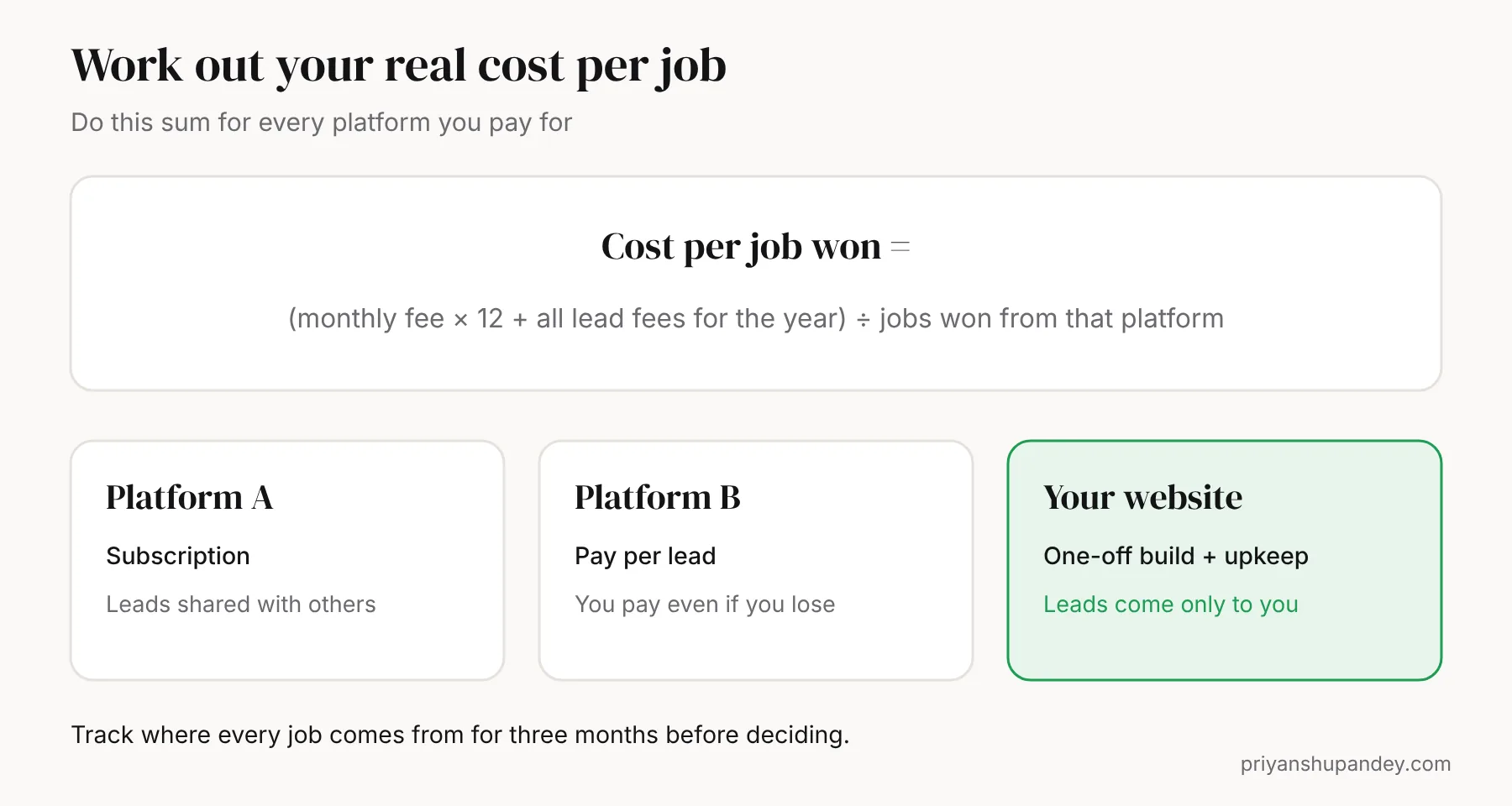
- Add up a year of fees: subscription × 12, plus every lead, credit or shortlist fee.
- Count the jobs you actually won from that platform, not the leads.
- Divide the yearly cost by jobs won.
- Compare it with your average profit per job. If a platform takes a large share of the profit, it’s costing you more than it looks.
A worked example
These numbers are made up to show the method; use your own.
| Platform A (subscription) | Platform B (pay per lead) | |
|---|---|---|
| Yearly fees | £59 × 12 = £708 | 60 leads × £15 = £900 |
| Jobs won | 6 | 9 |
| Cost per job won | £118 | £100 |
| Average profit per job | £250 | £250 |
| Share of profit spent on the lead | 47% | 40% |
Both platforms “work”, but each takes almost half the profit of every job they bring. That is the number to beat with your own website and Google profile.
The costs that don’t show on the invoice
- Competing on price. When a lead goes to several trades, the customer compares quotes before you’ve spoken.
- Time. Calling, quoting and chasing leads that go elsewhere is unpaid work.
- Contracts. Some platforms auto-renew for 12 months or charge for the rest of a minimum term if you leave early.
- Borrowed reputation. Your reviews live on their site. If you leave, you start again.
What your own website and Google profile give you
- Enquiries only you receive. Nobody else is quoting against the same lead.
- An asset that compounds. Service and area pages keep bringing calls for years once they rank.
- Your own reviews. Google reviews on your Business Profile stay with you and help you rank in the map pack.
- Control. You choose which jobs, areas and prices to promote.
What a trade website needs to win jobs
- Your phone number and a call button at the top of every page.
- One page per main service, with photos of real jobs and what it typically involves.
- One page per town you want work from, with the areas and postcodes you cover.
- Reviews, accreditations (Gas Safe, NICEIC, TrustMark) and insurance details.
- A short quote form that accepts photos, plus WhatsApp.
- Fast loading on a phone, because most customers search with one in hand.
Questions to ask before signing a platform contract
- How many other trades receive the same lead?
- Do I pay for leads I can’t take or that turn out to be fake?
- What is the minimum term, and what happens if I cancel early?
- Do my reviews stay visible if I leave, and can I show them on my own website?
- Will my listing appear in the platform’s search results on this plan?
A middle ground: Google Local Services Ads
Local Services Ads appear at the very top of Google for many trade and professional searches, with a “Google Guaranteed” or “Google Screened” badge. You pay per lead rather than per click, the lead comes only to you, and the reviews build on your Google profile. They’re available for many UK trades, including plumbers, electricians, locksmiths and cleaners. They aren’t free, but unlike shared platform leads, you’re not competing with three other quotes for the same customer.
Build reviews you own
- Set up your Google Business Profile and get its short review link.
- Send the link to every customer the day the job finishes.
- Put a QR code on invoices and van signage.
- Show your Google reviews on your website, next to your phone number.
- Keep your platform reviews too: they still help while you transition.
The sensible mix: don’t switch overnight
Cancelling every platform on day one is risky. A website and Google profile take months to build momentum. Run them side by side and shift your spending as your own enquiries grow.
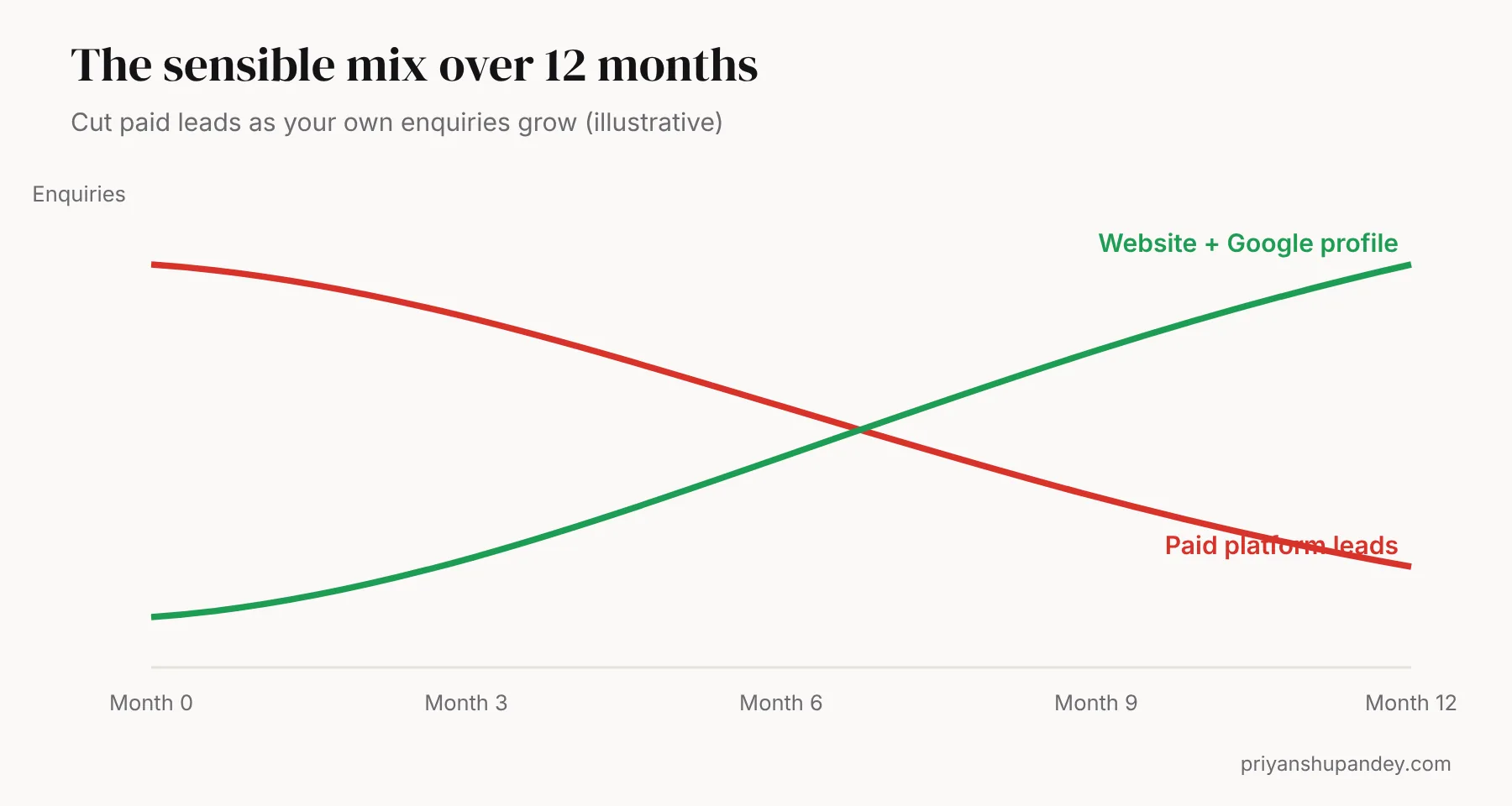
- Months 0–3: keep your best-performing platform. Launch your website and complete your Google Business Profile. Ask every customer for a Google review.
- Months 3–6: track where every job comes from. Drop the platform with the worst cost per job.
- Months 6–12: as website and Google enquiries become steady, reduce paid leads to quiet seasons only.
Want to see what a website could bring in? Try my free website ROI calculator.
Need help with this?
Website design, done for you.
I plan it, my specialist team delivers it, and you get a fixed written quote after a free call.